COMMUNITY & CULTURE · NOVEMBER 2, 2026
Rushing the Season, or Are We All Just Desperate for a Little Joy?
Why Ladera Ranch is ready to skip straight to the holidays, what psychology says about starting early, and how to add a little magic without going full Clark Griswold.

There are two kinds of people in Ladera Ranch on November 1.
The first are still recovering from Halloween, stepping over miniature Snickers wrappers, contemplating whether it would be socially acceptable to plop a Santa hat on that front porch skeleton, and firmly insisting that Christmas decorations have no business appearing before Thanksgiving.
The second group woke up on November 1, poured a peppermint mocha, opened the garage storage cabinets, and whispered the three words they've been waiting eleven months to say: It's tiiiiiiime.
The pumpkins are barely in the green waste bins, and somewhere in Ladera, Mariah Carey is already defrosting. While Thanksgiving traditionalists might accuse these early decorators of rushing the season, I suspect there's something more interesting going on.
What if we're not rushing Christmas? What if we're simply ready to feel something good?
Apparently, We're Not Alone
The enthusiasm for an early holiday season isn't confined to our little Ladera Ranch bubble. According to the National Retail Federation's 2026 holiday survey, 43% of holiday shoppers planned to start shopping before November, while 91% of American adults plan to celebrate the winter holidays.
A separate 2026 survey conducted by Michaels and Morning Consult found that nearly one in four holiday celebrants begin decorating before November. Among those getting an early start on holiday preparations, 53% say they're hoping to reduce the stress of December.
The generational differences are particularly interesting. Roughly one-third of Millennials and Gen Z respondents begin decorating before November, compared with just 11% of Baby Boomers. Perhaps younger generations have figured out something practical: if you're going to spend an entire weekend hauling decorations out of the garage, you might as well get more than three weeks of enjoyment out of them.
Why Does Christmas Feel Especially Appealing This Year?
Let's address the elephant in the room, or more appropriately, the nine-foot pre-lit elephant currently on sale at Costco.
For many American households, 2026 has been financially and emotionally demanding. The National Retail Federation reports that 56% of holiday shoppers expect economic conditions to influence their spending plans. Consumers are navigating affordability concerns, uncertainty about the future, competing demands on their time, and the seemingly endless mental noise of modern life.
Yet despite these pressures, Americans still want to celebrate. Perhaps that isn't contradictory at all.
When the outside world feels unpredictable, we naturally gravitate toward things that feel familiar, manageable, and meaningful. Traditions provide continuity, rituals bring structure to chaotic days, and familiar sensory experiences can transport us to periods of life we remember more fondly.
There's also something reassuring about exercising control over our immediate environment. We may not be able to influence inflation, the headlines, or what tomorrow brings, but we can decide what our homes feel like when we walk through the door.
Nobody has ever solved an economic crisis by hanging a wreath, but there's something to be said for making an ordinary Tuesday evening feel a little less ordinary.
The Psychology of Christmas Cheer Is More Interesting Than You Think
It's easy to dismiss early holiday decorating as another symptom of our consumer culture, but there's genuine psychological research that helps explain why seasonal traditions can feel so comforting.
Nostalgia is a surprisingly powerful emotional resource. Researchers have found that recalling meaningful memories can strengthen feelings of social connectedness, personal continuity, optimism, and purpose. A familiar Christmas song may evoke childhood mornings, a grandparent's living room, family gatherings, or a particular season of life when the world seemed less complicated.
Our emotional response to these traditions often extends well beyond the decorations themselves. A certain smell, melody, or ornament can reconnect us to people, places, and experiences that helped shape our identities. Nostalgia can also be bittersweet, particularly when the holidays remind us of people we've lost or relationships that have changed. Still, for many of us, these familiar associations offer a welcome sense of comfort.
Anticipation is part of the pleasure, too. We tend to think of Christmas as a particular day, but much of its emotional appeal comes from everything leading up to it. There's the first evening the tree lights come on, the familiar movie playing while dinner is cooking, the Saturday morning coffee in your favorite holiday mug, and the evening drive through the neighborhood as the houses begin to glow.
Psychologically, looking forward to pleasurable experiences can be rewarding in its own right. Starting the season earlier gives us more opportunities to enjoy those small moments instead of concentrating all our expectations on one spectacular December morning.
Finally, there's the psychology of connection. A fascinating study published in the Journal of Environmental Psychology in 1989 examined how people interpreted holiday decorations on the exteriors of homes. The researchers found that Christmas decorations could influence observers' perceptions of the residents' friendliness and sociability.
That doesn't mean hanging lights automatically makes someone happier or more neighborly. It does suggest that our surroundings communicate social messages, sometimes before we've exchanged a single word.
In a place like Ladera Ranch, where cul-de-sacs, neighborhood traditions, decorated homes, and evening walks are woven into community life, those little signals contribute to something larger. We're doing more than decorating individual houses; we're participating in a shared atmosphere that makes a neighborhood feel like a community.
Are We Making Christmas Magical for Our Kids, or Healing the Christmases We Never Had?
There's another psychological layer to our enthusiasm for creating holiday magic, particularly for those of us raising children. Sometimes the Christmas we're working so hard to create has as much to do with our own childhoods as it does with theirs.
Maybe you grew up being shuffled between divorced parents, spending Christmas Eve in one house and Christmas morning in another, learning early that the holidays came with complicated schedules, divided loyalties, and the uncomfortable feeling that enjoying yourself with one parent might somehow hurt the other.
Maybe your childhood holiday soundtrack was less Bing Crosby and more your parents arguing with the in-laws in the kitchen. Perhaps there wasn't a mother baking cookies in a perfectly coordinated apron or a father patiently hanging Christmas lights on the roof. Both parents may have been working, exhausted, and doing everything they could to keep the bills paid.
Those of us who grew up in the latchkey generation might remember letting ourselves into an empty house after school, making a snack, turning on the television, and figuring things out until somebody came home. Christmas wasn't necessarily a month-long celebration of carefully curated family togetherness. Sometimes it was simply a welcome break from school, a few presents under the tree, and whatever traditions our parents could manage.
Of course, plenty of us had wonderful childhoods that simply didn't resemble the sentimental, cinnamon-scented version of Christmas that has become our collective cultural ideal. Childhood memories are rarely as neat or magical as the Hallmark movies suggest.
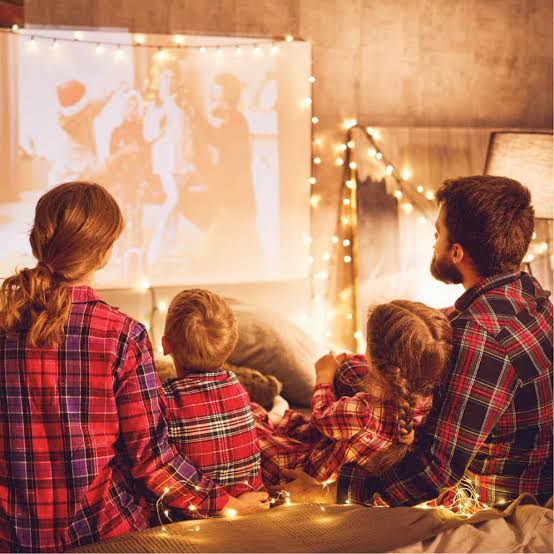
Now we've grown up, and many of us have children of our own. We're buying the matching pajamas, baking the cookies, planning the traditions, hanging the lights, and orchestrating cozy movie nights. Somewhere along the way, we became determined to make certain that when our children look back on their childhoods, they'll remember a home filled with warmth, security, and magic.
In some ways, we're not just decorating our homes. We're redecorating our memories.
Psychologists sometimes describe a related tendency as compensatory parenting, in which parents consciously or unconsciously try to provide their children with experiences, emotional support, or opportunities they believe were missing from their own upbringing.
This impulse isn't inherently unhealthy. Recognizing what we wish had been different about our childhoods and deliberately choosing to create something better can be a meaningful form of personal growth. It's one way families change patterns rather than simply passing them down.
The distinction lies in whether we're creating these experiences because they genuinely bring our families joy or because some younger part of us is still trying to make an old disappointment turn out differently.
Problems arise when our children's Christmas becomes an unconscious assignment to repair our own. We begin feeling pressure to make every moment magical, every tradition memorable, and every holiday morning worthy of a photograph. Heaven forbid somebody doesn't appreciate the matching pajamas after we've spent three weeks tracking down everyone's sizes.
Suddenly, the joy we've worked so hard to create has become another source of stress.
There's something else worth remembering about the Christmases we may be trying to correct. Our parents were navigating their own financial pressures, relationship difficulties, exhaustion, and unresolved childhood experiences. Many had fewer resources, less emotional language, and a very different set of cultural expectations surrounding parenting.
Let's also give them a little credit. When they forgot that last-minute Christmas gift, there was no one-click Amazon delivery coming to the rescue. They had to put on actual pants, climb into the station wagon, and brave the mall in December. Those were different times.
Despite all the imperfections, many of us still have beautiful memories from those years. We remember the smell of the Christmas tree, a grandmother's house, the television specials we waited all year to watch, the excitement of waking up with our siblings, or a beloved ornament that somehow survived every family move.
The details may have faded, but the emotional impressions remain. That may be the most valuable lesson we can carry into our own parenting.
Our children don't need us to recreate the childhood we wish we'd had. They need us to be present for the childhood they're actually having. They need connection more than choreography, warmth more than extravagance, and parents who are enjoying the holidays alongside them rather than collapsing under the pressure of making everything perfect.
If putting up the Christmas tree on November 1 brings your family happiness, by all means, pull out the ornaments. Just remember that you don't have to heal every Christmas past by making this one flawless.
When Holiday Magic Becomes Another Full-Time Job
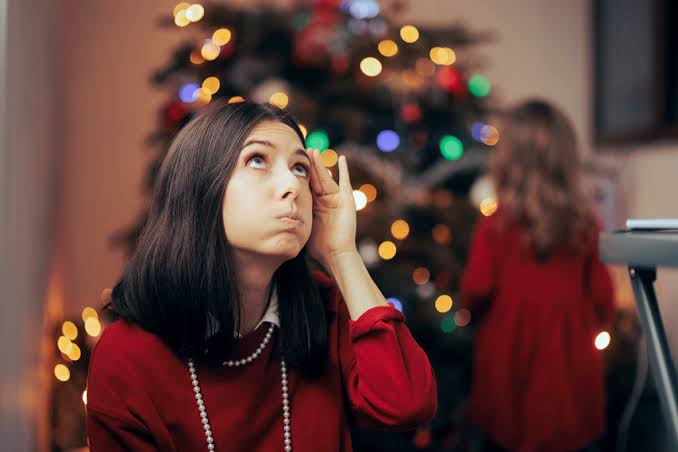
This is where I think we sometimes lose the plot. We take something that is supposed to bring us joy and transform it into another exhausting performance involving the perfect tree, matching pajamas, coordinated wrapping paper, Pinterest-worthy holiday cards, elaborate tablescapes, and approximately 47 seasonal activities that somehow need to happen between school pickup and bedtime.
There's a strange irony in working ourselves into exhaustion so our families can have relaxing holiday memories.
Perhaps 2026 is the year we give ourselves permission to celebrate differently. The Michaels survey found that 65% of respondents want a less commercial holiday season, while 54% believe their households already have more stuff than they need.
Those findings suggest that our appetite for holiday magic may not necessarily translate into wanting more possessions. Perhaps what we're actually craving is atmosphere: a slower morning, a softer living room, the smell of pine, familiar music, or a movie we've seen a hundred times playing quietly while everyday life unfolds around it.
None of these experiences requires an elaborate decorating marathon or a credit card statement that will haunt us in January.
Maybe we're not rushing the season. Maybe we're reclaiming it.
We may be trying to make our homes feel the way we always wished they had, or perhaps we're simply old enough to recognize how quickly these years disappear. There are only so many Christmas mornings with our children under one roof, and an ordinary Tuesday evening can become something worth remembering with a little music, warm lighting, and a willingness to enjoy it.
The goal doesn't have to be giving our children the Christmas we never had. Perhaps we can offer them something even better: parents who are genuinely enjoying the Christmas they're having.

The Bubble's Guide to a Little Sprinkle Before the Sparkle
For those who aren't quite ready to commit to full Christmas, consider this your permission slip to introduce a little holiday atmosphere one micro-moment at a time. These ideas require very little money, minimal effort, and absolutely no obligation to climb onto the roof with a ladder.
1. Trade Red and Green for Gold, Silver, and Soft Whites
If stockings and Santa figurines feel premature, introduce a winter-inspired palette instead. Champagne gold, brushed silver, ivory, warm neutrals, natural greenery, and soft twinkle lights can make a space feel festive without announcing that the North Pole has officially taken over.
A shallow bowl filled with metallic ornaments, a velvet ribbon on a vase, or a few frosted branches can subtly shift a room's atmosphere. These understated touches also transition beautifully through Thanksgiving and into January.
2. Let Your House Smell Like Christmas
Our sense of smell is closely connected to the brain systems involved in memory and emotion, which helps explain why certain fragrances can evoke such vivid associations.
A pine, balsam fir, cedarwood, orange-clove, or subtle cinnamon candle can create a seasonal atmosphere without a single ornament in sight. If you'd rather skip scented candles, try a stovetop simmer pot with orange slices, cinnamon sticks, and cloves, keeping it attended while it's heating.
Sometimes holiday cheer has less to do with what we see and more to do with what greets us when we walk through the door.
3. Turn Your Television Into a Cozy Winter Window
One of my favorite low-effort decorating tricks requires absolutely no storage bins. YouTube has an entire universe of ambient videos featuring crackling fireplaces, snowy European villages, candlelit cabins, and cozy Christmas coffee shops.
Try searching for Cozy Christmas Cabin Fireplace 4K, Snowy Christmas Village Ambience, Vintage Christmas Jazz Coffee Shop, or Winter Cabin with Snowfall and Crackling Fire. Within seconds, your living room can appear to overlook a charming Alpine village, complete with drifting snow and a roaring fireplace.
You'll get all the atmosphere without leaving Orange County, where we'll probably still be wearing shorts.
4. Create a Holiday Soundtrack Without Going Full Jingle Bells
For those who want the emotional warmth of Christmas music without hearing Mariah Carey 37 times before Thanksgiving, instrumental holiday soundtracks offer a lovely compromise.
Try searching Spotify for Christmas Movie Soundtracks Instrumental, Cozy Christmas Piano, Holiday Jazz Instrumental, or Christmas at Hogwarts. The film scores from The Holiday, Home Alone, and The Polar Express can create that cinematic winter feeling without demanding everyone's attention.
Think less crowded shopping mall and more cozy cottage in a Nancy Meyers movie.
5. Put a Cozy Movie on in the Background
Not every holiday movie needs to become an official family event involving hot chocolate, matching blankets, and a designated movie night. Sometimes the movie can simply be part of the atmosphere while you cook dinner, fold laundry, or spend a lazy Sunday afternoon at home.
The Holiday is practically a decorating guide disguised as a romantic comedy, while Home Alone delivers nostalgia and one of the most recognizable holiday scores ever written. You've Got Mail offers cozy New York bookshops and a gentler transition from fall into winter. Little Women (2019) is full of candlelight and beautiful interiors, while The Family Stone captures the emotional chaos of a house filled with relatives. While You Were Sleeping rounds out the list with snowy Chicago scenery and a healthy dose of '90s nostalgia.
Consider it ambience rather than another activity that needs to be scheduled.
6. Change the Lighting, Not the Entire House
There's a reason restaurants, boutique hotels, and cozy cafés pay so much attention to lighting. It changes how a space feels without requiring much else.
Try turning off the overhead lights in favor of warm lamps, soft-white fairy lights, or battery-operated candles. A strand of warm-white lights tucked into a glass vase or arranged along the mantel can make an otherwise ordinary room feel inviting.
The transformation is simple, inexpensive, and wonderfully low-commitment.
7. Create One Tiny Seasonal Ritual
This might be the most meaningful suggestion of all because traditions don't have to be elaborate to become memorable.
Drink your morning coffee from a holiday mug, take a short evening walk to see which neighbors have started decorating, play an instrumental soundtrack while preparing breakfast, or spend ten minutes reading beside the tree lights.
The trick is to choose something small enough that it doesn't become another obligation. Repeated little pleasures give the season texture and offer us opportunities to slow down long enough to notice it.
Perhaps It's Time to Stop Accusing People of Rushing the Season
For the record, there's absolutely nothing wrong with waiting until after Thanksgiving. Some people love the distinct rhythm of autumn, Thanksgiving, and Christmas, while others associate the holidays with grief, stress, financial pressure, or complicated family relationships. Nobody owes the neighborhood a decorated house or a festive disposition.
There's equally little reason to ration someone else's enthusiasm. If a neighbor wants to spend the next eight weeks enjoying twinkle lights, familiar music, and something cheerful to anticipate, perhaps the rest of us can simply enjoy the view.
We've spent enough of 2026 worrying about things beyond our control. Creating a little warmth within our own homes doesn't require justification, particularly when it brings our families together and makes everyday life a little more enjoyable.
So, Ladera, here's our proposal: Don't rush the holidays. Stretch the joy.
Put up the tree or leave the pumpkins a little longer. Celebrate Thanksgiving with gratitude, bring out the silver ornaments whenever you're ready, and make the cookies from scratch or buy them at Costco. There's room for all of it, including the possibility that the best part of Christmas isn't the holiday itself, but the accumulation of small, imperfect moments that make the weeks leading up to it feel special.
As for those of you who already have your Christmas lights up, don't worry. We see you, we're not judging, and there's a very good chance we're next.
THE BUBBLE WANTS TO KNOW: Are you Team November 1, Team After Thanksgiving, or Team Just a Little Sprinkle? Tell us when your decorations go up and share your favorite way to make home feel cozy for the holidays.


Be the first to comment.